

Secretary of State says objectives are ahead of schedule and conflict will not be prolonged, as Washington weighs contingencies and focuses on securing the Strait of Hormuz
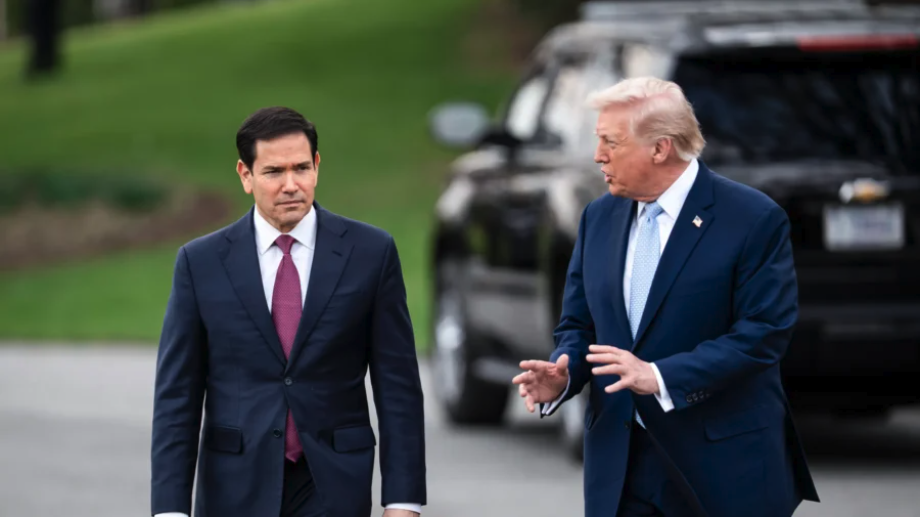
Secretary of State Marco Rubio said Friday that the United States can achieve all of its objectives in the war with Iran without deploying ground troops and that the military operation will not be prolonged.
Speaking to reporters after a meeting with the Group of Seven (G7) nations in France, Rubio addressed questions about potential U.S. troop deployments in the Middle East and the duration of the conflict.
“This is not going to be a prolonged conflict,” he said, adding that the Trump administration has “been as clear as you can possibly be” about its objectives since the beginning. The U.S. military aims to “destroy their factories that make missiles, rockets, and drones,” as well as Iran’s navy, missile launchers, and air force, he said.
“We are achieving all of those objectives, and we are ahead of schedule on most of them,” Rubio added. “And we can achieve them without any ground force.”
Earlier in the week, a source familiar with Pentagon planning told The Epoch Times that the U.S. Army’s 82nd Airborne Division would be deployed to the Middle East, prompting speculation about a possible ground assault.
Rubio described the deployment as a precautionary measure to address unforeseen circumstances and to provide the administration with “maximum opportunity to adjust to contingencies should they emerge.”
His remarks came as President Donald Trump extended a deadline for Iran to reopen the Strait of Hormuz, a key global transit route for oil and gas shipments, while noting that talks between Tehran and Washington are ongoing. Some Iranian officials, however, have denied that negotiations are taking place.
Rubio also said ensuring the Strait of Hormuz remains open to shipping will likely pose an “immediate challenge” even after military operations conclude. He warned that Iran could attempt to impose a toll on the waterway, an action he said would be illegal and could inflict significant economic damage worldwide.
He added that the United States would seek international cooperation to maintain open access to the strait after hostilities end.
Also on Friday, Iran’s Islamic Revolutionary Guard Corps advised workers in the Middle East near U.S. military assets to leave those areas for safety reasons.
“We recommend that you urgently leave the locations of the American forces to avoid any harm coming to you,” the group said, according to the state-run Tasnim News agency.
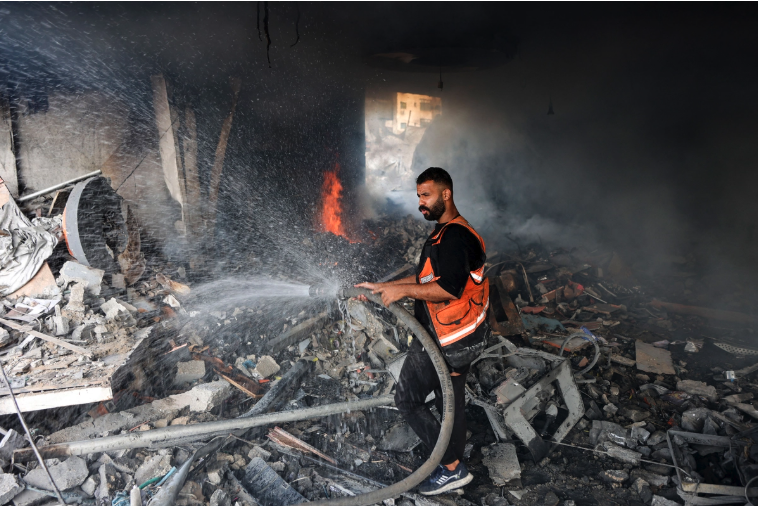
Meanwhile, Iranian state media reported that several nuclear-related facilities were struck on Friday, including a heavy-water plant and a yellowcake production facility. Yellowcake is a concentrated form of uranium produced after impurities are removed from raw ore.
Iran’s Atomic Energy Organization said the strikes posed no risk of contamination, according to state media reports.
The Trump administration had been engaged in talks with Iran over its nuclear program just days before joint U.S.–Israeli strikes began on Feb. 28. While the United States, Israel, and European countries have said Iran was enriching uranium to weapons-grade levels, Tehran has consistently denied the claims, maintaining that its nuclear program is for peaceful purposes.
Uranium for civilian use typically requires enrichment of about 5 percent. Iran has enriched uranium to 60 percent, which the International Atomic Energy Agency says represents more than 90 percent of the effort needed to reach weapons-grade levels.