

New directive by defense chief seeks to expand service members’ ability to carry privately owned weapons on installations for personal protection
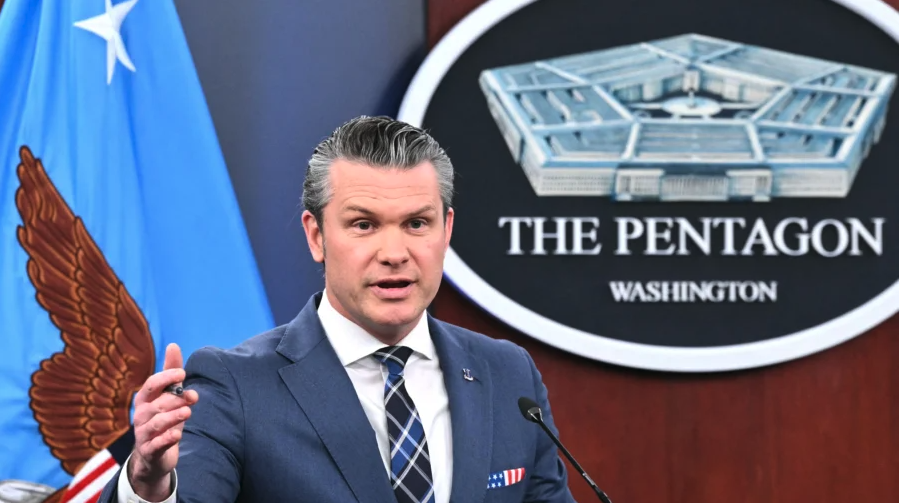
WASHINGTON — Secretary of War Pete Hegseth said Thursday that he will allow service members to carry personal firearms onto military installations, citing the Second Amendment and recent shootings at bases across the country.
In a video posted to X, Hegseth said he is signing a memo directing base commanders to permit requests from troops to carry privately owned firearms “with the presumption that it is necessary for personal protection.”
He added that any denial of such a request must be explained in detail and provided in writing.
“Effectively, our bases across the country were gun-free zones,” Hegseth said. “Unless you're training or unless you are a military policeman, you couldn't carry, you couldn't bring your own firearm for your own personal protection onto post.”
Questions over why service members lacked access to firearms have frequently surfaced following shootings on U.S. military bases. These incidents have ranged from isolated altercations between personnel to mass casualty events, including the 2009 shooting at Fort Hood, Texas, carried out by an Army psychiatrist that left 13 people dead.
Hegseth referenced several such incidents in his remarks, including a shooting last year at Fort Stewart in Georgia that injured five soldiers. Officials said the assailant, an Army sergeant assigned to the base, used a personal handgun before being subdued by fellow soldiers and taken into custody.
“In these instances, minutes are a lifetime,” Hegseth said. “And our service members have the courage and training to make those precious, short minutes count.”
War Department policy has long prohibited military personnel from carrying personal firearms on base without authorization from a senior commander, with strict rules governing storage and handling.
Typically, service members must check firearms out of secure storage to access designated on-base hunting areas or shooting ranges, and return them promptly after authorized use. Outside of those areas and formal training environments—where weapons are often carried without ammunition—military police have generally been the only armed personnel on base.