

Tehran warns of sweeping maritime retaliation if Washington maintains port restrictions, while cease-fire uncertainty and sanctions pressure intensify diplomatic tensions
The Iranian military on Wednesday threatened to target shipping in the Red Sea if the U.S. continues its blockade of Iranian ports, as American regional command confirmed that maritime trade to the country has been halted.
Major General Ali Abdollahi said that if the United States persists in what he described as “illegal action of naval blockade in the region” and creates insecurity for Iranian commercial vessels and oil tankers, it would risk violating the cease-fire.
“The powerful Iranian armed forces will not allow any exports or imports to continue in the Persian Gulf, the Gulf of Oman, and the Red Sea,” he said, according to state-run PressTV.
He added that if the blockade continues, “Iran will take strong measures to defend its national sovereignty and interests.”
On Wednesday, U.S. Central Command (CENTCOM) stated that the blockade, which took effect Monday morning, has “completely halted” Iran’s sea trade, impacting its ports.
American service members in the region “remain positioned and ready to act against any vessels seeking to violate the blockade,” CENTCOM said in a post on X.
The blockade followed the collapse of talks between a U.S. delegation and the Iranian government over the weekend. However, the White House confirmed Wednesday that further negotiations remain possible.
White House press secretary Karoline Leavitt told reporters that the U.S. has not “formally requested an extension of the ceasefire” with Iran. The cease-fire announced by Donald Trump on April 7 is set to expire next Tuesday.
“At this moment, we remain very much engaged, in these negotiations, in these talks,” Leavitt said, adding that there are ongoing “discussions” about holding further in-person meetings. “But nothing is official until you hear it from us here at the White House,” she said.
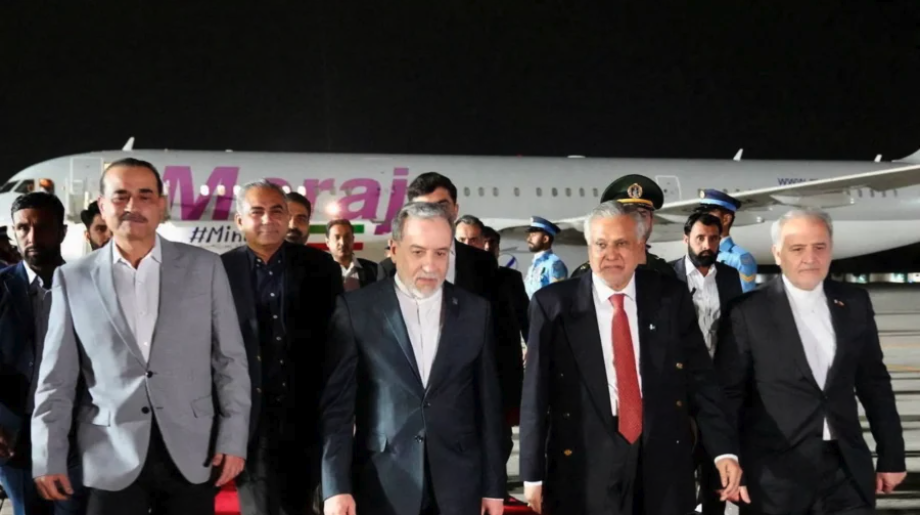
She noted that a potential next round of talks would “very likely” take place in Islamabad, as in previous discussions.
Beyond the blockade, the Trump administration is increasing economic pressure on Tehran by imposing secondary sanctions on financial institutions engaged with Iran.
Treasury Secretary Scott Bessent said Wednesday that companies and countries have been warned that purchasing Iranian oil or holding Iranian funds could trigger such sanctions.
“If you are buying Iranian oil, that if Iranian money is sitting in your banks, we are now willing to apply secondary sanctions, which is a very stern measure,” he said.
“And the Iranians should know that this is going to be the financial equivalent of what we saw in the kinetic activities,” he added.
The warning followed a letter sent Tuesday by the U.S. Department of the Treasury to financial institutions in China, Hong Kong, United Arab Emirates, and Oman, cautioning against continued business with Iran.
On Wednesday, the Treasury Department also sanctioned an Iranian-linked oil smuggling network involving dozens of companies and individuals accused of transporting Russian and Iranian oil through front companies.
“The Shamkhani network evades sanctions through a group of seemingly legitimate administrative, consulting, and shipping firms that manage all aspects of the network’s fleet,” the department said. “These firms and their employees maintain a robust public presence to provide a veneer of legitimacy while allowing the network to support the Iranian regime.”
Trump also said Wednesday that he had communicated with Xi Jinping, who agreed not to supply weapons to Iran amid reports that Beijing had considered such transfers. Trump previously warned that China could face an additional 50 percent tariff if it proceeded.