


Damage to LNG infrastructure, helium supply, and undersea cables raises alarm over long-term disruptions to energy, technology, and financial systems worldwide
The world’s attention remains fixed on oil prices, but the most severe shock unfolding in the Strait of Hormuz lies beneath the seabed and within damaged LNG infrastructure. A single strike in the region now threatens to disrupt not only energy supplies, but also semiconductors, internet connectivity, and global financial flows for years.
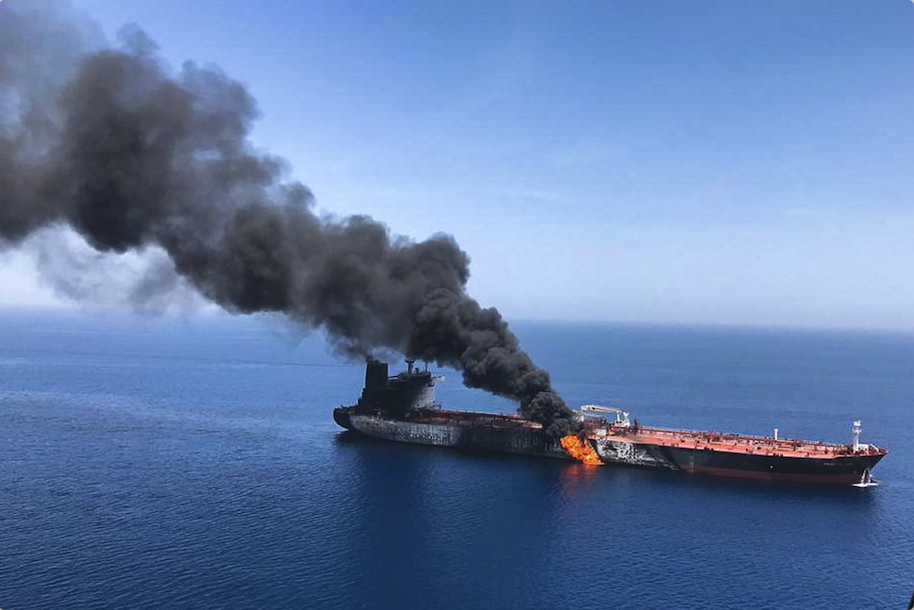
While international focus has centered on oil price volatility following Iranian strikes on Ras Laffan in Qatar on March 18–19, a more critical factor has been largely overlooked: the destruction of key cryogenic industrial equipment. Ras Laffan is not only the world’s largest LNG export hub but also a concentration point for some of the most advanced liquefaction infrastructure globally.
At the core of this system are Brazed Aluminium Heat Exchangers (BAHX), essential for ultra-low temperature gas separation. These units, weighing hundreds of tons, are custom-built and housed in specialized insulated chambers.
Globally, only five major manufacturers produce these systems: Chart Industries (U.S.), Fives Cryo (France), Kobe Steel and Sumitomo (Japan), and Linde (Germany).
Production timelines are extensive, with complete systems requiring three to four years, while the heat exchanger core alone takes 12 to 18 months. Order books were already full prior to the outbreak of the conflict.
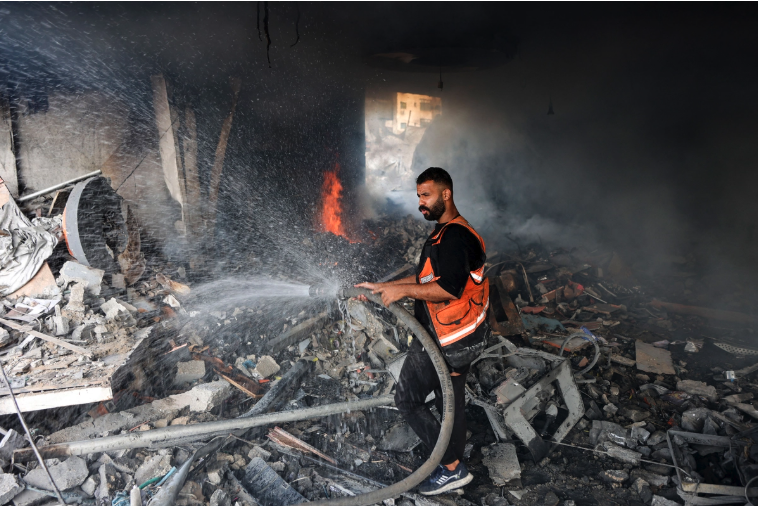
Iranian missile strikes caused “extensive damage” at Ras Laffan Industrial City, triggering major fires and disrupting LNG production. QatarEnergy confirmed that several LNG facilities were affected, with estimated losses reducing Qatar’s export capacity by 17%. Qatar accounts for nearly 20% of global LNG supply.
Recovery could take three to five years if BAHX units are severely damaged. Aluminum components are highly susceptible to fatigue, with each thermal cycle causing irreversible degradation. On-site repairs are limited and can only be performed a few times before full replacement becomes necessary.
The situation is further complicated by logistics. Replacement equipment, each weighing hundreds of tons, and specialized engineering teams must pass through the Strait of Hormuz—where 90% of shipping now lacks war-risk insurance. Hull insurance premiums have surged from 0.125% to as high as 7.5%.
Control of maritime traffic by Iran’s Islamic Revolutionary Guard Corps (IRGC) has created a severe bottleneck, making repairs difficult without access to components that are themselves challenging to transport safely.
The impact extends far beyond energy. Qatar supplies roughly one-third of the world’s helium as a byproduct of LNG production. Helium is critical for semiconductor manufacturing, MRI systems, and aerospace applications. Major producers currently hold only a few months of reserves. With disruptions in Hormuz and damage at Ras Laffan, helium prices have surged by 40% to 100% in a short period, threatening semiconductor supply chains and high-tech industries, including artificial intelligence.
At the same time, Iran has issued warnings targeting undersea fiber-optic cables running through the Strait of Hormuz and the Red Sea. Approximately 95–97% of global internet traffic relies on these submarine cables, not satellites.
Global banking, stock markets, and cloud computing systems depend heavily on this infrastructure. Key cable systems—including FALCON, Gulf Bridge International, SEA-ME-WE 6, AAE-1, FLAG (Hormuz), and EIG, Seacom, SMW-4/5/6, and 2Africa Pearls in the Red Sea—are now in high-risk zones under IRGC influence.
On March 28, the IRGC declared that critical infrastructure in Hormuz and the Red Sea “will not be exempt” if hostilities continue. Although no cables have yet been severed, major technology firms have already begun rerouting data traffic to mitigate risks.
Historical precedents highlight the vulnerability of such systems. In 2008, eight cable disruptions off Egypt cut 70–80% of data flow between the Middle East and Europe for weeks. A similar incident occurred in the Red Sea in 2024 due to a ship anchor. A deliberate attack could have devastating consequences, though it would also pose risks to Iran, which depends on the same network.
Satellite technology, such as Starlink—with more than 9,500 low-Earth orbit satellites—has emerged as a backup solution, offering low latency and resilience. Many oil tankers have already adopted Starlink systems to maintain communications.
On the military front, the IRGC claimed it conducted coordinated drone and missile strikes on U.S. Marine positions on Bubiyan Island in Kuwait, causing “heavy casualties,” and vowed to continue operations until U.S. forces withdraw from what it described as “Islamic territory.”
However, Kuwaiti sources reported that the attack caused structural damage to the Mubarak Al Kabeer port under construction on Bubiyan Island, with no official confirmation of U.S. casualties.
Earlier reports from Reuters and U.S. sources confirmed that six U.S. Army reservists were killed in an attack on Shuaiba port in early March. The unit was logistical, not Marine Corps, and the incident did not occur on Bubiyan Island. Total U.S. casualties in the conflict remain significantly lower than Iranian claims.
The IRGC’s communication pattern often involves exaggerating achievements, using selective footage or inflated figures to gain informational advantage before independent verification. Global markets frequently react sharply to initial headlines, contributing to volatility in oil prices, insurance costs, and investor sentiment.
At just 38 kilometers wide, the Strait of Hormuz has become a critical global chokepoint. Roughly 20% of the world’s oil, 20% of LNG, one-third of helium supply, and a vast share of critical data traffic pass through this corridor.
Any prolonged disruption risks escalating into a global crisis spanning energy, technology, and finance, with recovery timelines measured in years rather than months.